
Coveralls for Factory Work Uniforms: Fabrics, Features and How to Choose
Convexo Team · · 6 min read
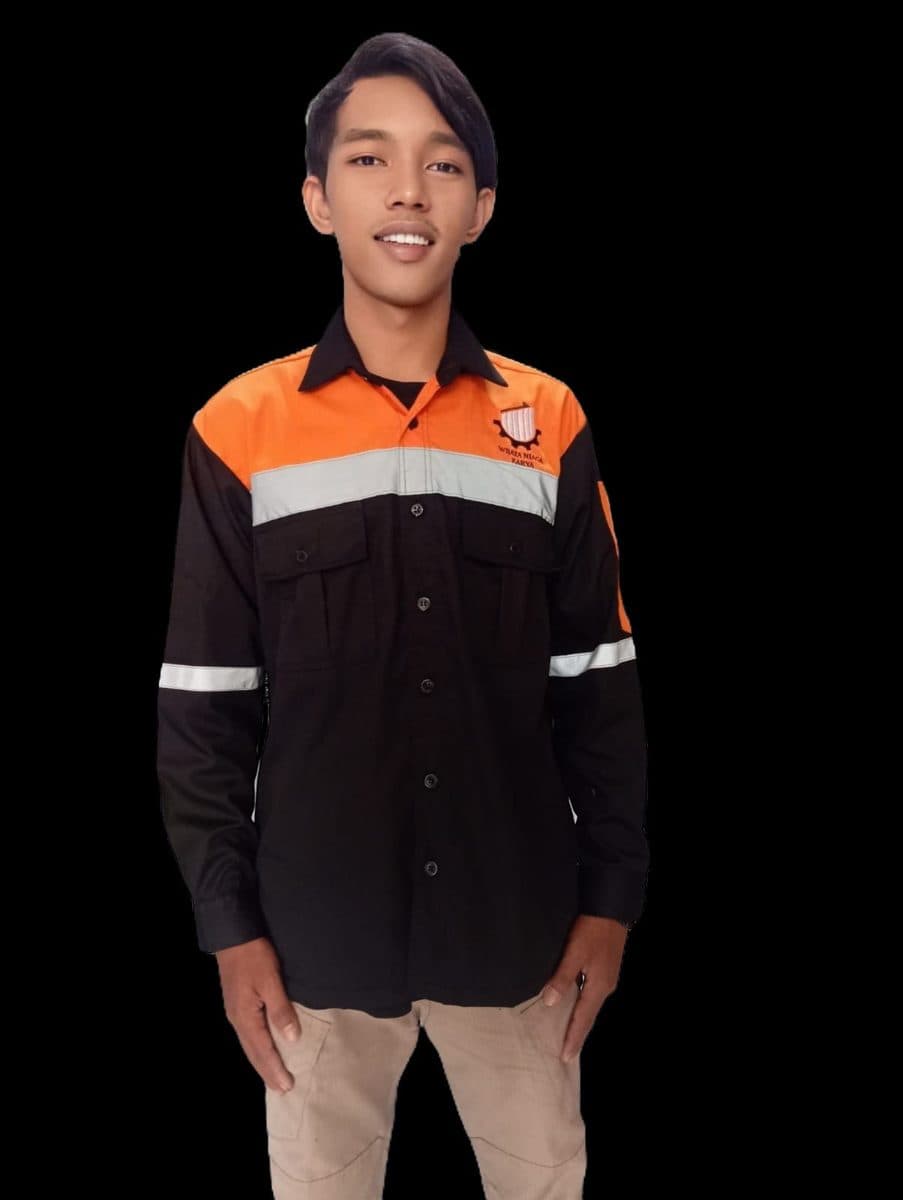
Coveralls (known locally in Indonesia as a wearpack) are one-piece workwear that joins a shirt and trousers into a single garment, usually with a zipper down the front. They protect almost the whole body from oil, dust and splashes, so they are widely used in workshops, factories, mines and the oil and gas sector. For lighter work, a work shirt and trousers set is often more practical.
This guide helps HR, GA and procurement teams decide on the right type of work uniform, choose fabrics and features, and collect sizes for many employees at once.
What are coveralls?
Coveralls are one-piece work clothing, also called a boiler suit. They look like a long-sleeved shirt joined to a pair of long trousers. The wearer simply steps in, puts their arms through the sleeves, and closes the front zipper.
Because there is no join at the waist, the top does not pull out when the wearer bends, squats or crawls under a machine. This is the main reason coveralls are popular in dirty work areas.
Besides the one-piece style, there is also a two-piece version. The top and trousers are separate, but they are made in the same fabric and color, with the same features.
Coveralls or a work shirt and trousers?
Both types of uniform are common in factories. The choice depends on the kind of work.
| Aspect | Coveralls (one-piece) | Work shirt and trousers |
|---|---|---|
| Body protection | Covers the body with no gap at the waist | Joined at the waist, the shirt can pull out |
| Wearing | Fully dressed in one go, a bit awkward for toilet breaks | More flexible, the top can be taken off during breaks |
| Look | Technical, made for the field | Neater, can be worn to the office |
| Sizing | Must fit both height and body measurements | Top and trousers can be different sizes |
| Best for | Workshops, machine maintenance, mining, oil and gas, painting | Light production, warehouses, QC, supervisors, factory admin |
Many companies use both. Technicians and maintenance staff wear coveralls, while production staff and supervisors wear work shirts with work trousers.
When are coveralls needed?
Coveralls are most useful in workplaces where clothes get dirty quickly or could get caught:
- Workshops. They protect clothing from oil and grease when working under vehicles or machines.
- Factories and machine maintenance. The body is fully covered, so loose shirt ends are less likely to catch on machine parts.
- Mining and construction projects. They keep out dust and mud, and usually come with reflective tape (often called scotlight in Indonesia) so workers are visible to heavy equipment operators.
- Oil and gas and the chemical industry. These sites often use coveralls with a fabric specification from the company's HSE team.
- Warehouses and logistics. Worn by loading and unloading teams who often handle dusty goods.
Common coverall fabrics
Coverall fabric needs to be strong, abrasion resistant and comfortable for active movement. Common choices are:
- American Drill. A thick, dense twill fabric that does not tear easily. It is a very common choice for coveralls and factory uniforms. Its full properties are covered in our article on American Drill fabric.
- American Drill Premium (Tropical). Thinner and lighter, suited to hot work areas or indoor work.
- Special fabrics to company standards. Some oil and gas or chemical sites require a specific fabric, for example a flame-resistant one. If you have a requirement like this, share the specification at the start so availability can be checked.
For work trousers worn with a shirt, American Drill is also a common choice because it is strong and keeps its shape.
Coverall features to consider
Coveralls are made to order, so the features can be matched to the job. Features that are often requested:
- Front zipper. Makes the coveralls easy to put on and take off. A two-way zipper lets the wearer open the lower part without taking off the whole garment.
- Functional pockets. Chest pockets with flaps, side pockets, back pockets, a pen pocket on the sleeve, and a tool pocket on the thigh.
- Elastic back waist. Gives a better fit without feeling tight.
- Reflective tape. Reflective strips on the body, sleeves and legs so workers are visible in low-light areas. See our full article on reflective tape on work uniforms.
- Ventilation. Air vents on the back or under the arms reduce the stuffy feeling of a thick fabric.
- Adjustable cuffs. Keep sleeve ends from hanging loose near machinery.
The more features you add, the more complex the sewing. Choose the features that will actually be used on the job to keep the budget efficient.
How to get sizes right for a large workforce
Sizing is the issue that most often has to be redone on coverall orders. Coveralls that are too short in the body will pull when the wearer bends. These steps help reduce sizing mistakes:
- Ask the garment maker for a size chart. Check body length, chest, waist and trouser length.
- Have sample sizes available to try on. A few employees with different builds try the samples, and the rest follow.
- Record sizes by name. Make a list per department with each name, size, and special notes such as extra-large sizes.
- Test working movements. When trying the samples, ask employees to squat, bend and raise their arms. The coveralls should stay comfortable.
- Order spares. A few extra pieces in the most common sizes are useful for new employees.
Colors and logo embroidery
Dark colors such as navy, dark gray and black make oil stains less visible. Bright colors such as orange or fluorescent (hi-vis) colors help workers stand out across large areas. Many companies combine the two with color-blocked panels, for example a dark body with bright shoulders or panels. The black and orange work shirt with reflective stripes in this article's photo is an example of that kind of combination.
For logos, computer embroidery holds up to heavy washing better than screen printing. The usual positions are the logo on the left chest, the employee's name on the right chest, and the company name on the back. The differences from screen printing are explained in embroidery vs screen printing.
Coveralls and work uniforms at Convexo
Convexo makes coveralls and work trousers to order, as well as work shirts, polo shirts, jackets and vests. Our workshop is in Jababeka 2, Central Cikarang, Bekasi Regency. One example of a field uniform we have made is the shirt for PLN Workshop Balikpapan in navy American Drill, with embroidery on the left and right chest, back embroidery, and 3 cm reflective tape.
Other work uniform styles are on our work uniforms page. For areas that need high visibility, coveralls can be paired with a safety vest with reflective tape.
Practical tips for ordering coveralls
To keep your order running smoothly, prepare this information before you contact a garment maker:
- The type of work and work area, so the fabric and features can be matched to them.
- The style you want, one-piece or two-piece.
- Colors, embroidery positions, and whether you need reflective tape.
- A list of sizes by employee name.
- Any special specifications from your HSE team.
The minimum order at Convexo is 6 pcs per style, and the more you order, the lower the price per piece. Production takes about 4–6 days after the down payment, with the exact schedule confirmed by our admin. You can also ask for a sample first. Tell the Convexo admin about your team's work uniform needs on WhatsApp for advice and a quote.